Von Willebrandova choroba
Find a cause you want to help. Every contribution counts.

Všeobecné
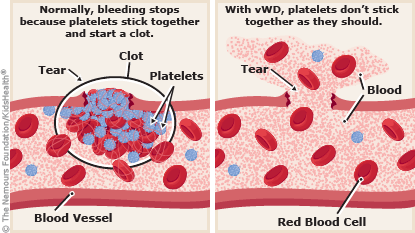
Von Willebrandova choroba (anglicky von Willebrand disease - VWD) je najčastejšia vrodená krvácavá choroba. Príčina: genetická mutácia, ktorá má za následok znížené množstvo či funkciu tzv. Von Willebrandovho faktora, ktorý má v našom tele veľký význam v procese zrážania krvi. Výskyt v populácii sa udáva až okolo 1%. Krvácavé prejavy sú rôznej intenzity, prevažne nie príliš výrazné, a väčšinu postihnutých k lekárovi vôbec neprivádza. Táto choroba je pomenovaná po fínskom lekári Erikovi von Willebrand, ktorý v roku 1924 po prvý raz opísal dedičnú poruchu krvácania u rodín na Alandských ostrovoch.
Liečba:
Väčšinou nie je nutná, podávanie Von Willebrandovho faktora ako koncentrátu v injekčnej forme (veľmi nákladné, preto najmä dočasné pred operačnými zákrokmi), možno podávať Dezmopresín, ktorý zvyšuje hladiny faktora, dôležitá je prevencia závažnejších úrazov (neodporúčajú sa adrenalínové športy atď.).
- najrôznejšie krvácajúce prejavy
- ľahká tvorba hematómov (modrín)
- epistaxa (krvácanie z nosa) s možnosťou prieniku krvi do kanála spájajúceho nosnú dutinu s očami (canalis nasolacrimalis), to môže spôsobiť "ronenie krvavých sĺz"
- krvácanie z ďasien
- väčšie menštruačné krvácanie u žien
- silnejšie krvácanie pri pôrode
- skoré krvácanie pri poraneniach a operáciách
- krvácanie do tráviaceho traktu
- často tiež krv v stolici alebo krv v moči
- krvácanie do kĺbov a svalov u ťažkých foriem
Pre spojenie sa s ďalšími ľuďmi s rovnakou diagnózou vo vašom okolí sa prihláste.
Prihlásenie