Oslerov-Weberov-Renduov syndróm
Find a cause you want to help. Every contribution counts.

Všeobecné
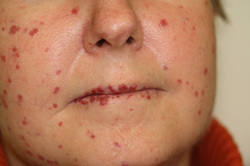
Oslerov-Weberov-Renduov syndróm (hereditárna hemoragická teleangiektázia, anglicky hemorrhagic telangiectasia / Osler–Weber–Rendu syndrome) je autozomálne dominantne dedičné ochorenie spojené s teleangiektáziami a arteriovenóznymi malformáciami, ktoré sa najčastejšie prejavuje krvácaním z nosa. Ochorenie je spôsobené vaskulárnymi dyspláziami (prestavba steny ciev), ktoré majú tendenciu krvácať.
Môže sa prejaviť už počas detstva, ale väčšinou sa prejaví počas dospievania alebo vo veku do 30 rokov. Poškodenie ciev môžeme nachádzať v naropharyngu, mozgu, pľúcach, pečeni, slezine, močovom a tráviacom trakte, ramene, prstoch...
Diagnostika:
Diagnostika sa tradične opiera o klasickú triádu: epistaxa, teleangiektázie a pozitívna rodinná anamnéza. K potvrdeniu diagnózy sa niekedy robí kožná biopsa. Jedná sa o dedičnú chorobu, a preto je taktiež nutné vyšetrenie rodinných príslušníkov.
Liečba:
Terapia je väčšinou symptomatická a podporná. Obmedzuje sa na lokálnu liečbu krvácania z nosa, krvnej transfúzie a podávania preparátov železa. Antifibrinolytiká sa podávajú ako prevencia krvácania sliznice. V liečbe sa tiež používa elektrokaterizácia a laserová ablácia teleangiektazií. Individuálne sa rieši postihnutie pľúc. V prípade vážneho krvácania sa zvažuje aj chirurgická terapia daného postihnutého orgánu.
- epistaxa (krvácenie z nosa) – postihuje asi 95% chorých - môže spôsobovať anémie s nutnosťou podania transfúzie
- teleangiektázia (lokalizované nahromadenie rozšírených drobných krvných ciev)
- lokalizácie: v koži a sliznici – najčastejšie pery, nos, prsty
- orgánové: pľúca, obličky, mozog, slezina
- zvracanie krvi
- čierna stolica (natrávená krv)
- anémia
- vykašliavanie krvi
- pery a koža sfarbená do modra
- bolesti hlavy
- krvácanie do mozgu
- omdlievanie
- bolesť na hrudníku
- vznik krvných zrazenín
- a mnoho ďalších v závislosti na lokalizácii cievnych malformacií
Pre spojenie sa s ďalšími ľuďmi s rovnakou diagnózou vo vašom okolí sa prihláste.
Prihlásenie