
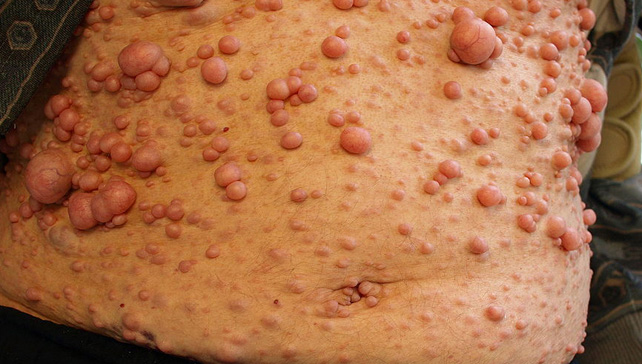
Všeobecné
TYP 1
Morbus von Reclinghausen alebo Reclinghausenova choroba je najčastejšia neurofibromatóza (tzv. Typ 1) periférneho typu. Táto závažná, nie príliš častá choroba je podmienená autozomálne dominantne dedičným ochorením, ekdy dochádza k tvorbe neurofibŕomov pod kožou a niekedy aj vo vnútorných orgánoch. Neurofibrómy sú nezhubné nádory, ktoré vznikajú v obaloch nervových vlákien - Schwannových buniek, človek ich pozoruje ako podkožné guličky. Svojím rastom môžu neurofibrómy utlačiť blízke nervy, cievy a iné dôležité tkanivá. Neurofibrómy majú predispozíciu k vzniku benígnych aj malígnych nádorov. Choroba má variabilné vyjadrenia.
Prejavy:
- tzv. "café-au-lait spots" (škvrny farby "bielej kávy" - nahromadenie pigmentu v koži, v 90% sa objaví do 5 rokov veku)
- neurofibrómy (mnohopočetné tumorózne uzlíky - v koži i podkoží - hlavne v podpazuší a slabinách)
- Lischove uzlíky (hamartómy dúhovky)
- zvýšené riziko vzniku rôznych nádorových ochorení
- gliómy centrálnej nervovej sústavy (gliómy optického nervu - n. opticus ai.), mozgových nádorov
- neurofibrosarkómy
- rabdomyosarkómy
- feochromocytóm
- leukémie a pod.
- postihnutie muskuloskeletáného (pohybového) systému - subperiostálnej (podokosticovej) neurofibrómy - pôsobiacej na kosti, jej preriedenie a patologické fraktúry, skolióza, vrodená dysplázia (nevyvinutá) tíbia (kosť lýtková)
- bolesti chrbta, krivá chrbtica až poruchy chôze
postihnutie intelektu - epilepsia
- zúženie obličkových tepien (stenózy renálnych artérií)
- poruchy zraku alebo slepota (z dôvodu gliómu optického nervu)
- poruchy rozprávania
- skolióza chrbtice
- bolesti brucha, vracanie, u niekoho hnačky, u niekoho zápchy
- bolesti hlavy
patologické cievy mozgu - poruchy učenia
- mentálna retardácia
- vysoký krvný tlak
- škvrny, pehy v mieste styku kože (pod prsiami, podpazušie, medzi zadkom,...)
- predčasná alebo oneskorená puberta
nízky vzrast - zlé školské výsledky
- svrbenie kože
TYP 2
Je oveľa vzánejšia ako neurofibromatóza 2. typu, vyskytuje sa 10x menej často. Ide o mutáciu na 22. chromozóme.
Prejavy:
- neurinómy n. acusticus (nezhubný nádor, ktorý postihuje sluchový nerv) - závraty, pocit na vracanie, pískanie v ušiach, narušenie sluchu už v mladosti
- výskyt mozgových nádorov a nádorov miechy - meningeóm
- epileptické záchvaty, poruchy pohyblivosti a citlivosti častí tela, inkontinencia moča, zmeny osobnosti, demencia atď.
Diagnostika:
Genetické vyšetrenie už prenatálne, čo sa využíva v rodinách, kde sa neurofibromatóza vyskytuje frekventnejšie. Pacienti s neurofibromatózou sa pravidelne sledujú za účelom skorej diagnostiky nádorov, ktoré sú možné diagnostikovať pomocou zobrazovacích metód (USG, CT, MRI) a klinického vyšetrenia.
Liečba:
Liečba je symptomatická. U zvýšenej tvorby nádorov sa dá z kozmetických dôvodov alebo pri útlaku dôležitých tkanív nádory odstrániť, v prípade mozgových nádorov sa zvažuje neurochirurgický zákrok, alebo možno cielene nádor ožiariť pomocou Leksellovho gama nožu. V prípade vzniku zhubného nádoru sa postupuje podľa štandardných postupov, využíva sa chirurgická liečba a chemoterapia.
- závisí podľa typu (1, 2)
Pre spojenie sa s ďalšími ľuďmi s rovnakou diagnózou vo vašom okolí sa prihláste.
Prihlásenie