
Všeobecné
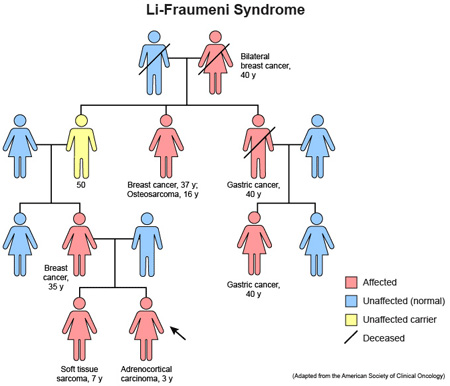
Li-Fraumeni syndróm (anglicky Li-Fraumeni syndrome) je veľmi zriedkavé, autozomálne dominantne dedičné ochorenie. Je pomenované podľa amerických lekárov Fredericka Pei Li a Josepha F. Fraumeni, ktorí ho prvýkrát popísali.
Ak človek trpí Li-Fraumeni syndrómom, má výrazne zvýšenú náchylnosť k vzniku rakoviny.
Najčastejšie sa vyskytuje spolu so sarkómami, karcinómami prsníka, leukémiou a nádorom nadobličiek.
Príčinou vzniku syndrómu je mutácia tumorsupresorového génu p53, ktorý by mal za normálnych okolností brániť nekontrolovanému rastu nádorových buniek, ale ak je mutovaný, nie je nádorovému rastu zabránené. Mutácia je dedičná, ale môže vznikať aj de novo.
Diagnostika
Na Li-Fraumeni syndróm pomýšľame vtedy, ak sa nádor vyskytne u jedinca v mladom veku (pod 45 rokov). Využíva sa tiež možnosť genetického poradenstva a genetického testovania. Takáto osoba je potom pravidelne sledovaná, aby sa prípadný nádor objavil v rannom štádiu.
Liečba
Rovnako ako iné genetické ochorenia, Li-Fraumeni syndróm je neliečiteľný.
- rakovina sa často objavuje v mladom veku
- rakovina sa často objavuje niekoľkokrát v priebehu života (a iných orgánov)
- zvýšené riziko vzniku akejkoľvek invazívnej rakoviny
- skorý nástup rakoviny prsníka
- výskyt sarkómov mäkkých tkanív
- kostný sarkóm
- nádory mozgu
- leukémia
- lymfómy
- karcinóm kôry nadobličiek
- melanóm
- Wilmsov tumor
Pre spojenie sa s ďalšími ľuďmi s rovnakou diagnózou vo vašom okolí sa prihláste.
Prihlásenie