
Všeobecné
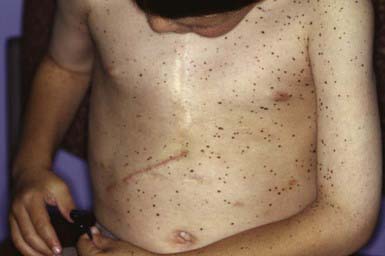
Leopardí syndróm (anglicky Leopard syndrome, Cardiocutaneous syndrome, Gorlin syndrome II) je zriedkavé autozomálne dominantne dedičné ochorenie. Ide o ochorenie postihujúce viac orgánových sústav.
Toto ochorenie je spôsobené mutáciou génu PTPN11. Názov tohto ochorenia vychádza z prejavov tohto syndrómu. Prvýkrát bolo ochorenie pomenované v roku 1969.
Príznaky sú vysoko variabilné aj v stupňoch závažnosti.
Diagnostika a liečba
Prítomnosť ochorenia sa potvrdí genetickým testom a ďalej pomocou uvedených príznakov.
Liečba tohto ochorenia je iba symptomatická, špecifická pre každého postihnutého. Toto ochorenie nie je život ohrozujúce. Dôležité je však tieto pacientov sledovať v odborných ambulanciách a odhaliť možné závažné postihnutia orgánov. Dôležitá je aj sociálna a psychologická podpora pacienta a rodiny.
- červeno-hnedé až tmavo hnedé fliačky na koži
- lézie sa zvyčajne vyskytujú vo veľkom počte a môžu postihovať až 80% povrchu tela
- lézie sa môžu tvoriť aj na slizniciach dutiny ústnej
- škvrny majú nepravidelné okraje
- na určitých miestach kože naopak môžeme pozorovať aj miesta so zníženou pigmentáciou
- poruchy srdcového rytmu a odchýlky v EKG zázname
- štrukturálne zmeny srdca - hypertrofická obštrukčná kardiomyopatia a z toho vyplývajúce odpadávanie, kolaps, arytmie
- predkus
- stenóza pľúcnej tepny (zúženie)
- nezostúpené semenníky
- oneskorený rast, nízky rast
- hluchota
- mierna mentálna retardácia
Pre spojenie sa s ďalšími ľuďmi s rovnakou diagnózou vo vašom okolí sa prihláste.
Prihlásenie