
Všeobecné
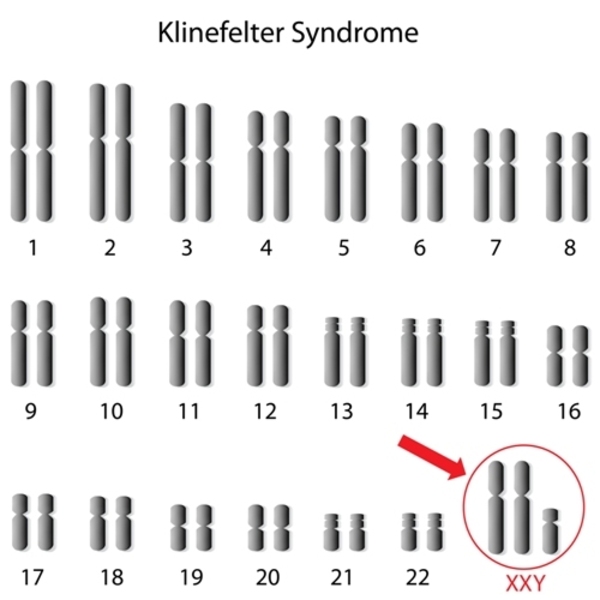
Klinefelterov syndróm (Klinefelterov-Reifensteinov-Albrightov syndróm) je genetické ochorenie kedy jedinec (muž) má jeden chromozóm Y a dva alebo viac chromozómov X (normálne je jeden) - tzn. 47 XXY, v niektorých prípadoch ide o mozaiky či inú kombináciu napr. 3 X chromozómy. Výskyt v našich končinách sa pohybuje okolo 0,2%.
Jedinci majú zvyčajne vyjadrené mužské pohlavné znaky, ale sú neplodní. Inteligencia nebýva zmenená. Dnešné možnosti liečby neumožňujú chorobu vyliečiť, ale liečiť ju symptomaticky. Jedinci tak môžu byť bez príznakov.
Liečba
Podávanie testosterónu je hlavná liečba. Títo jedinci majú zvýšené riziko nádoru zo zárodočných buniek semenníkov, rakoviny prsníka, osteoporózy. S kvalitnou liečbou môžu muži s touto genetickou odchýlkou viesť plnohodnotný život, ako zdraví jedinci.
- ak je podkladom genetickej chyby mozaika (časť buniek v tele má normálnu chromozomálnu výbavu - karyotyp), bez príznakov
- neplodnosť
- hypogonadizmus (nedostatočne vyvinuté pohlavné orgány)
- gynekomastia (zväčšenie prsných žliaz u mužov)
- veľkosť penisu nemusí byť ovplyvnená
- prítomná atrofia (zmenšenie) semenníkov s hyalinizacia semenotvorných kanálikov (nepriechodnosť pre ukladanie hyalínu)
- oneskorená puberta
- zmeny ochlpenia
- často vyššia chudá postava, eunuchoidné rysy (nemužské)
- nízka hodnota testosterónu v krvi, ale vysoké hodnoty folikuly-stimulujúceho hormónu (FSH) a luteinizačného hormónu (hypergonádotropný hypogonadizmus)
- oneskorený vývoj reči
- poruchy pozornosti alebo správania, poruchy učenia
Pre spojenie sa s ďalšími ľuďmi s rovnakou diagnózou vo vašom okolí sa prihláste.
Prihlásenie