
Všeobecné
Feingoldov syndróm (angl. Feingold syndrome, microcephaly-mesobrachyphalangy-tracheoesophageal fistula (MMT) syndrome, microcephaly-oculo-digito-esophageal-duodenal (MODED) syndrome, oculo-digito-esophagoduodental (ODED) syndrome) je zriedkavé geneticky podmienené vrodené ochorenie, výskyt syndrómu nie je známy. Postihuje celé množstvo rôznych tkanív a orgánov. Zatiaľ bol potvrdený len u niekoľkých desiatok ľudí na celom svete. Syndróm je veľmi variabilný a existuje veľa variácii od ľahkej po ťažkú. Dokonca aj jedinci v rovnakej rodine bývajú rozdielni.
Príčiny
Príčinou je mutácia génu MYCN, ktorý je uložený na chromozóme číslo 2. Tento gén je zodpovedný za tvorbu proteínu, ktorý hrá významnú úlohu v tvorbe tkanív a orgánov počas embryonálneho vývoja. Štúdie na zvieratách poukazujú, že proteín je dôležitý pre normálny vývoj končatín, srdca, obličiek, nervového systému, tráviaceho traktu a pľúc. MYCN proteín reguluje aktivitu ostatných génov, ktoré sa viažu na špecifické miesta DNA. Preto sa tento proteín volá transkripčný faktor. Dedičnosť je autozomálne dominantná, čiže na prejav choroby stačí jeden gén od jedného rodiča.
Diagnostika
Diagnózu možno určiť genetickým vyšetrením, ktoré preukáže mutáciu príslušného a známeho génu.
Liečba
Prevencia neexistuje a syndróm nemožno ani vyliečiť. Deformáciu tkanív môže riešiť plastická chirurgia a uzávery tráviacej trubice sa dajú vyriešiť pomocou klasickej chirurgie. Mentálna retardácia si môže vyžiadať komplexnú špeciálnu pedagogickú starostlivosť a včasnú intervenciu.
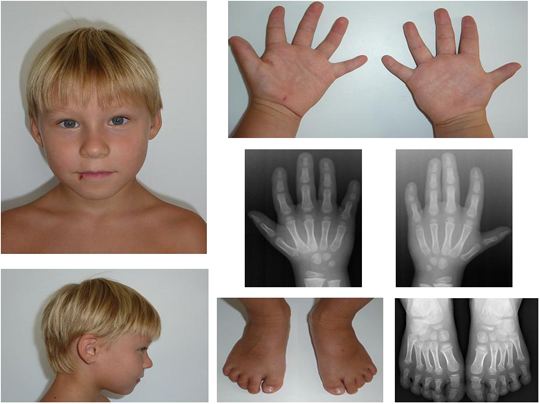
- deformácie hlavy, tváre a končatín – hlava býva abnormálne malá (mikrocefália), rovnako tak môže byť malá aj dolná čeľusť (mikrognácia), úzke očné štrbiny
- niektoré prsty na končatinách bývajú krátke, môžu byť nedostatočne vyvinuté palce a niekedy sa objavujú aj zrasty prstov (syndaktýlia)
- skoro u všetkých je prítomná brachymezofalangia (vrodené nápadné skrátenie stredných článkov prstov)
- klinodaktýlia (malformácia stredného článku prsta, ktoré spôsobuje jeho zakrivenie)
- hypoplázia palca (nevyvinutie palca)
- narušený je aj tráviaci trakt, časté sú vrodené zúženia až uzávery pažeráka a tenkého čreva, ktoré môžu tvoriť prekážky priechodu potravy
- inteligencia chorých býva narušená tiež, zvyčajne je prítomná mentálna retardácia
- ľahká až ťažká porucha učenia
- menej často sú prítomné vrodené chyby srdca, obličiek
- málo frekventné sú poruchy sluchu v rôznom rozsahu a poruchy rastu
Pre spojenie sa s ďalšími ľuďmi s rovnakou diagnózou vo vašom okolí sa prihláste.
Prihlásenie