
Všeobecné
Donohueov syndróm (angl. Donohue syndrome, Leprechaunism) je označenie pre veľmi vzácne vrodené ochorenie, ktoré je spojené s poruchou v metabolizme inzulínu. Ťažšie formy choroby bývajú veľmi nebezpečné a zvyčajne spôsobujú potrat postihnutého plodu, či relatívne skoré úmrtia narodených detí. Miernejšie formy choroby však umožňujú o niečo dlhšie prežitie.
Príčiny
Príčinou je genetická mutácia, ktorá spôsobuje rôzne hormonálne poruchy, najmä poruchu v inzulínových receptoroch. To sú štruktúry na povrchu buniek nášho tela, na ktoré sa viaže inzulín a umožňuje vstup cukru do buniek. Narušenie hormonálnej sústavy má potom za následok komplexné a závažné prejavy.
Prejavy
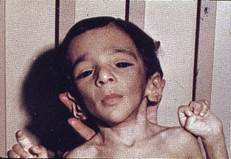
U postihnutého sa prakticky nevyvíja tukové tkanivo, čo mu dáva už po narodení zvláštny až starecký vzhľad. Len pomaly rastie, má zosilnené pery, rozšírené nosné dierky a odstávajúce uši. Bývajú prítomné zväčšené vonkajšie pohlavné orgány. Vzhľad chorého sa prirovnáva k bájnemu írskemu škriatkovi Leprechaunovi, a preto sa syndróm označuje aj ako Leprechaunizmus.
U chorých sa vzhľadom k neefektivite receptora pre inzulín vyskytuje inzulínová rezistencia typická pre cukrovku 2. typu – inzulínu je nadbytok (hyperinzulinémia), ale vstup cukru do buniek nie je schopný zabezpečiť. Okrem toho sa u chorých bežne zisťuje znížená koncentrácia cukru v krvi (hypoglykémia), ktorej existencia nie je celkom jasná (u inzulínovej rezistencie je naopak typická vyššia koncentrácia cukru v krvi), zrejme sa jedná o dôsledok komplexnej poruchy metabolizmu cukrov u syndrómom postihnutých ľudí.
Diagnostika
Podľa príznakov možno získať určité podozrenie, definitívne potvrdenie choroby možno vykonať až genetickým vyšetrením.
Liečba
Choroba je vrodená, prevencia preto nie je možná. Vykonávajú sa však pokusy s podávaním umelo upravenej zlúčeniny známej ako IGF (inzulín-like growth hormone), ktorá vraj má relatívne uspokojivý pozitívny efekt.
- starecký vzhľad po narodení (nevyvíja sa tukové tkanivo)
- pomalý rast
- zväčšené vonkajšie pohlavné orgány
- rozšírené nosné dierky
- inzulínovaá rezistencia
- znížená koncetrácia cukru v krvi (komplexná porucha metabolizmu cukrov)
Pre spojenie sa s ďalšími ľuďmi s rovnakou diagnózou vo vašom okolí sa prihláste.
Prihlásenie