
Všeobecné
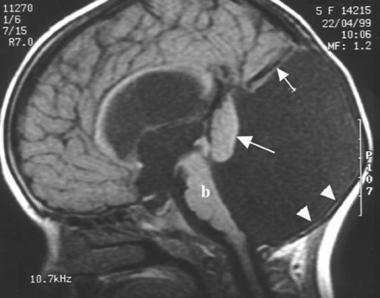
Dandy-Walkerov syndróm (anglicky Dandy-Walker syndrome, Dandy-Walker malformation, DWS) je zriedkavé vrodené neurologické ochorenie mozgu. Príčinou tohto ochorenia je tzv. Dandy-Walkerova malformácia, ktorá spočíva v aplázii (nevyvininutí) vermis, t.j. špecifickej časti mozočku, a vo vzniku veľkej cysty v zadnej jame lebečnej, ktorá je široko otvorená do IV. komory.
Následkom tejto vrodenej zmeny tkaniva mozočku je membranózna atrézia (nepriechodnosť) otvorov IV. komory mozgovej, čím dochádza k patologickému hromadeniu mozgomiešneho moku v mozgových komorách.
Liečba
Liečba spočíva v odstránení obštrukcie pri neurochirurgickom zákroku, pridružený hydrocefalus sa rieši najčastejšie zavedením shuntu.
- typicky aplázia vermis cerebelli (vrodené nevyvinutie strednej nepárovej červovitej časti mozočku)
- cysta v zadnej jame lebečnej, ktorá komunikuje so IV. mozgovou komorou
- veľmi priestranná zadná jama lebečná
- u 90% detí rozvoj hydrocefalu - patologicky zvýšené množstvo mozgovomiechového moku v centrálnom nervovom systéme
- rastúci obvod hlavy (makrocefália)
- napätá veľká fontanela ( "mäkký vrcholok hlavičky")
- rozostup lebečných švov
- tenšia koža na hlave
- vracanie, dávenie
- deviácie očnej gule smerom nadol (tzv. príznak zapadajúceho slnka - anglicky setting-sun sign)
- niekedy až porucha vedomia
- poruchy dýchania
- až polovica postihnutých má zníženú inteligenciu
Pre spojenie sa s ďalšími ľuďmi s rovnakou diagnózou vo vašom okolí sa prihláste.
Prihlásenie