
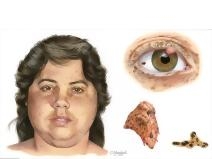
Všeobecné
Carneyov komplex (anglicky Carney complex) je dedičné ochorenie, ktoré zahŕňa tri podjednotky, ide o myxómy srdca, lentigo a endokrinné poruchy (poruchy žliaz s vnútornou sekréciou). Carneyov komplex je najčastejšie spôsobený mutáciami v géne PRKAR1A na 17. chromozóme. Táto mutácia sa vyskytuje u 70% ľudí trpiacich týmto ochorením. Menej často je príčina na 16. chromozóme.
Diagnostika a Liečba
Diagnostika sa odvíja od nižšie uvedených príznakov a tiež od genetického vyšetrenia. Liečba je symptomatická. V prípade myxómu srdca sa pristupuje k operačnému riešeniu.
- lentigo (pigmentová škvrna na koži pripomínajúca vzhľad šošovice)
- najčastejšie na tvári, najmä na perách, očných viečkach, spojovke a sliznici ústnej dutiny
- myxómy srdca
- myxómy na spojivke (Myxo - nádor spojivového tkaniva) - môžu viesť k mŕtvici a srdcovému zlyhaniu
- horúčka
- bolesť kĺbov
- dýchavičnosť
- srdcový šelest
- myxómy na spojovke
- myxómy prsníka
- schwanómy (najčastejšie postihujú sluchový nerv)
- nezhubné nádory pochádzajúce z Schwannových buniek (bunky obalujúce nervové vlákna a tvoriace myelínovú pošvu)
- neustále sa zhoršujúci sluch
- na ušiach tinitus
- poruchy rovnováhy
- niekedy obrna lícneho nervu
- nádory semenníkov
- tuhé zdurenie semenníka
- niekedy gynekomastia (rast pŕs u mužov)
- poruchy vylučovania
- ťažkosti súvisiace so vznikom metastáz (bolesti v bedrách pri metastázovanie do kostí, bolesť na prsiach a kašeľ pri metastázovanie do pľúc)
- endokrinné poruchy
- najčastejšie ako Cushingov syndróm - choroba spôsobená zvýšenou produkciou hormónov kôry nadobličiek
- nádory hypofýzy
- ďalej sa môže vyskytovať variant s modrým névom
Pre spojenie sa s ďalšími ľuďmi s rovnakou diagnózou vo vašom okolí sa prihláste.
Prihlásenie