Buschke-Ollendorffov syndróm
Find a cause you want to help. Every contribution counts.

Všeobecné
Buschke-Ollendorffov syndróm (angl. Buschke-Ollendorff syndrome, osteopoikilosis) je extrémne zriedkavé geneticky podmienené ochorenie postihujúce spojivové tkanivo, najmä kosti a kožu. Výskyt ochorenia je 1: 20 000.
Príčiny
Príčinou vzniku je genetická mutácia. Buď vzniká de novo, alebo ju chorý človek získal od chorého rodiča. Jedinec chorý touto chorobou má 50% šancu ňou bude trpieť., že aj jeho dieťa. Prenos je dedičný autozomálne dominantne.
Diagnostika:
Diagnostika sa realizuje určením postihnutého génu LEMD3.
Liečba:
Prevencia ani liečba syndrómu neexistujú. Prognóza choroby však nie je zlá a postihnutého nijako výrazne neobmedzuje ani neohrozuje.
- osteopoikilosis – zvýšená kostná denzita (hustota kostí), malé okrúhle oblasti viditeľné na RTG (ako charakteristické bodkovanie) na koncoch dlhých kostí ramena a stehna, na panve, rukách a chodidlách - nespôsobujú zdravotné problémy ani bolesť
- kožné névy (znamienka na koži)
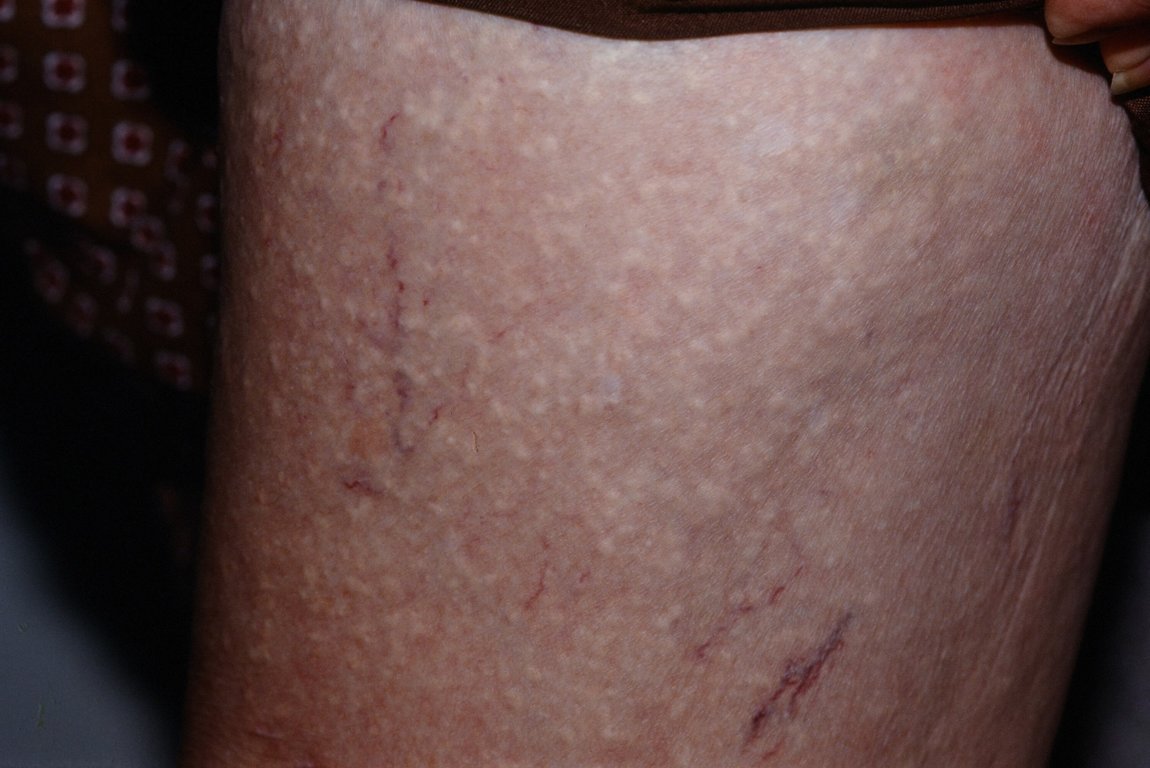
- na koži trupu a končatín vyskytujú miesta, kde je zmnožené podkožné väzivo - tieto miesta majú vzhľad vystupujúcich tuhých pupienkov a škvŕn, ktoré majú žltkastú farbu
Pre spojenie sa s ďalšími ľuďmi s rovnakou diagnózou vo vašom okolí sa prihláste.
Prihlásenie