
Všeobecné
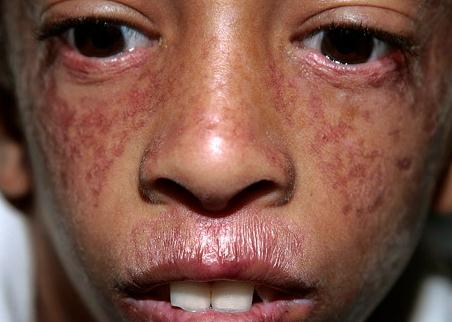
Bloomov syndróm (angl. Bloom syndrome, Bloom-Torre-Machacek syndrome) je veľmi raritné geneticky podmienené vrodené ochorenie s rozsiahlym dopadom na vzhľad postihnutého, nízkou postavou, kožnou senzitivitou na UV žiarenie, teleangiektázie na líčkach a nose v tvare motýľa (rozšírené cievky, ktoré sú viditeľné na koži), porucha imunity, zvýšená náchylnosť na rôzne nádory – najmä leukémie, lymfómy a nádory tráviaceho traktu. Choroba sa trochu častejšie vyskytuje v židovskej populácii.
Príčiny
Za chorobu je zodpovedná genetická mutácia v géne na 15. chromozóme, ktorý je dôležitý pre stabilitu chromozómov. Narušenie génu má za následok zvýšený výskyt poškodených chromozómov a častejší výskyt genetických mutácií. Dedičnosť je autozomálne recesívna.
Diagnóza:
Diagnózu stanovíme podľa prejavov choroby a genetickým vyšetrením, ktoré nájde príčinu, ktorá vyvoláva mutácie.
Liečba:
Prevencia ani liečba syndrómu nie je možná. Jedinou prevenciou komplikácií syndrómu je nevystavovanie sa slnečnému žiareniu, používanie opaľovacích krémov. Nutné sú pravidelné kontroly u dermatológa. Pravidelné a frekventované kontroly ako prevencia vzniku nádorových ochorení a ich nález v počiatočných štádiách sú taktiež dôležité.
- nízka postava – tzv. trpazličí vzrast, znížený rast, podvýživa
- typické črty tváre – tvár je pretiahnutá a úzka, dolná čeľusť je malá, nos je dlhší a uši odstávajú, malý obvod hlavy
- zmeny na koži - miestami sa vyskytujú tmavšie miesta a miestami svetlejšie škvrny, ktoré sa označujú ako škvrny farby „bielej kávy“ (Café au-lait [kafé ó-lie]). Koža chorého je silno citlivá na slnečné žiarenie, po vystavení sa slnku vzniká vyrážka a začervenané miesta s rozšírenými cievami – typicky na lícach, kde má začervenaná plocha tvar motýlích krídel
- znížená funkcia imunitného systému, ktorá vedie k častým infekciám, najmä k zápalom pľúcpostihnutí majú zníženú plodnosť
- často sa u nich vyskytuje mentálna retardácia
- zvýšený vznik genetických mutácií u chorého – poruchy reparácie DNA
- vyššie riziko nekontrolovateľného delenia buniek a vznik nádorových ochorení – leukémie, lymfómy, nádory tráviaceho traktu (karcinóm hrubého čreva)
- u 10% chorých sa vyvinie diabetes mellitus
Pre spojenie sa s ďalšími ľuďmi s rovnakou diagnózou vo vašom okolí sa prihláste.
Prihlásenie