
Všeobecné
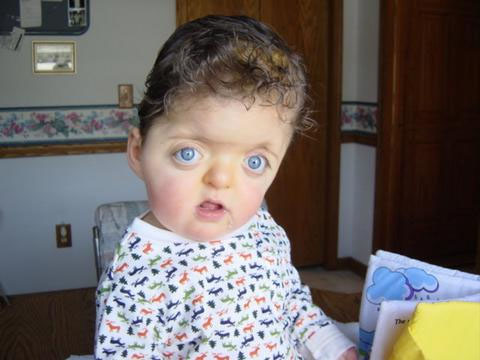
Apertov syndróm (anglicky Apert syndrome) je zriedkavé dedičné ochorenie vyznačujúce sa predčasným zrastom kostí lebky, deformitami tváre a zrastom prstov ruky alebo nohy. Výskyt tohto syndrómu je vzácny - 1 dieťa z 200.000 novorodencov. Ochorenie je dedičné - chorý má 50% riziko, že jeho deti budú postihnuté Apertovým syndrómom tiež.
Príčina:
Apertov syndróm vzniká mutáciou génu zodpovedného za správny vývoj a funkciu spojiva. Rizikovým faktorom vzniku mutácie je vek otca - nad 30 rokov.
Diagnostika:
Ochorenie diagnostikujeme klinickým vyšetrením. Pri náleze nižšie uvedených príznakov možno vykonať genetické vyšetrenie.
Liečba:
Liečba príznakov vyžaduje širokú spoluprácu chirurgov, neurológov, detských lekárov a ďalších. Zásadné je uvoľnenie predčasne zrastených lebečných švov neurochirurgom.
- predčasný zrast kostí lebky vo švíkoch
- zvýšenie vnútrolebečného tlaku - vracanie a bolesť hlavy
- pískanie pri dýchaní (chrčivý zvuk, ktorý je počuť z diaľky)
- dychové pauzy pri spánku
- pokrivenie tvaru lebky
- úchylky od prirodzeného tvaru (deformácia) tváre
- vysoké čelo
- prepadnutá tvár
- plochá hlavička
- deformácie očnice
- poruchy zraku
- vpadnutý koreň nosa
- deformácie dutiny ústnej
- poruchy chrupu
- deformácie horných a dolných končatín
- skrátenie ramenná kosť
- syndaktýlia (zrast prstov)
- obmedzenie hybnosti lakťa
- vbočené kolená
- inteligencia môže byť normálna alebo môže byť prítomná mentálna retardácia rôzneho stupňa
- prítomnosť najrôznejších vývojových chýb vnútorných orgánov
Pre spojenie sa s ďalšími ľuďmi s rovnakou diagnózou vo vašom okolí sa prihláste.
Prihlásenie