
Všeobecné
Achardov syndróm (angl. Achard syndrome) je veľmi zriedkavé geneticky podmienené vrodené ochorenie, ktoré je charakterizované poruchou spojivového tkaniva. Dôsledkom sú deformácie častí tela a zvýšená pravdepodobnosť vykĺbenia. Achardov syndróm je autozomálne dominantné ochorenie, prenos pacienta s touto diagnózou na potomka je 75%.
Prejavy:
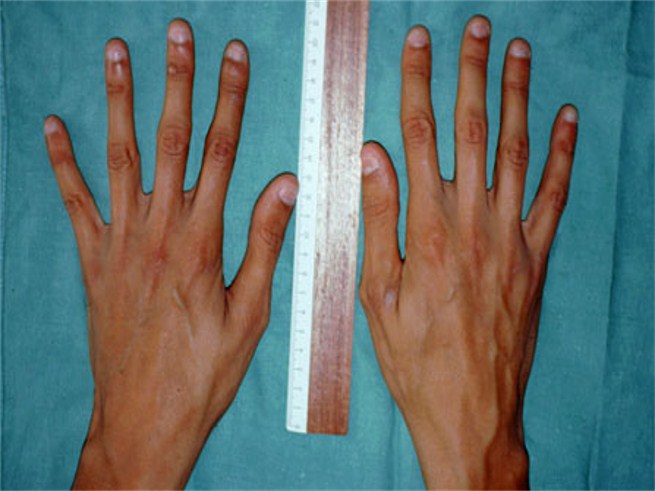
Porucha spojiva sa prejavuje zmenou tvaru lebky, ktorá býva skrátená a rozšírená (brachycefália). Rovnako tak sa u tohto syndrómu vyskytuje malá sánka (mikrognátia). Končatiny sú pretiahnuté a bývajú na nich prítomné dlhé pavúkovité prsty, ale naopak krátke palce. Kĺby chorého nie sú tak stabilné a majú sklon s vykĺbeniu.
Niektorými črtami (najmä dlhé končatiny a prsty) sú chorí s Achardovým syndrómom podobní chorým s Marfanovým syndrómom. Na rozdiel od Marfanovho syndrómu nie sú časté ochorenia kardiovaskulárneho aparátu.
Diagnostika:
Z vyššie uvedených prejavov možno vysloviť podozrenie na základe kliniky, spoľahlivou a vlastne jedinou metódou diagnostiky je však až genetické vyšetrenie.
Liečba:
Účinná liečba syndrómu nie je známa, pretože sa jedná o vrodené ochorenie. Liečba je podporná a symptomatická.
- dlhé končatiny
- arachnodaktýlia (dlhé úzke prsty)
- krátke palce
- zmena tvaru lebky (skrátená) - brachycefália
- mikrognathia (malá sánka)
- nestabilné kĺby (tendencia k vykĺbeniu)
Pre spojenie sa s ďalšími ľuďmi s rovnakou diagnózou vo vašom okolí sa prihláste.
Prihlásenie